European Food Festivals: Pacing Your Appetite Across the Continent
Eating your way across Europe is a travel cliché until you find yourself sitting at an endless trestle table in an Emilia-Romagnan village square, passing carafes of fizzy Lambrusco down the bench while volunteers in aprons ladle out fresh tortellini under strings of incandescent bulbs. That is where the romance turns delicious.
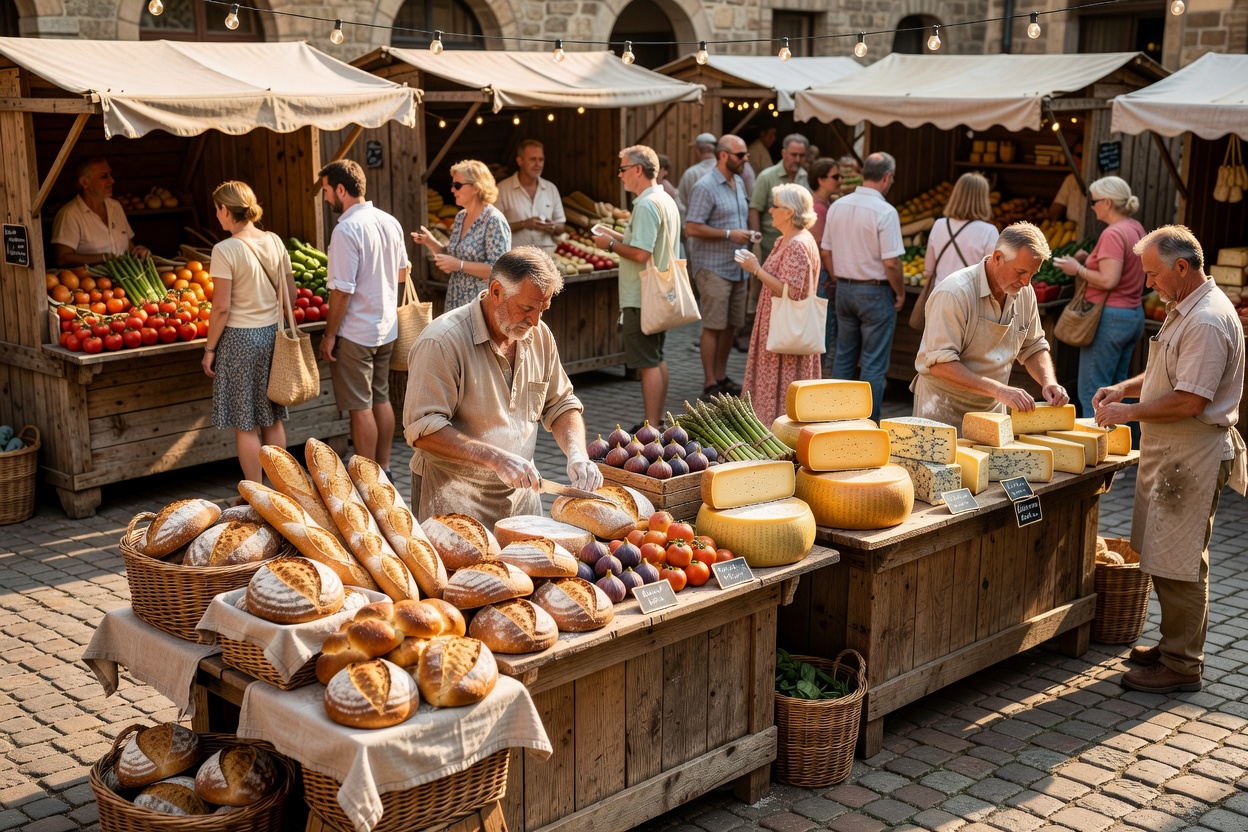
From Sacred Sagre to Modern Street Food Enclaves
European culinary events range from hyper-traditional Italian sagre (devoted exclusively to one hyper-local ingredient) to cutting-edge urban street food gatherings housed inside converted rail depots in Copenhagen or Bristol.
Decoding the Festival Styles: Sagra, Vendemmia, and Street Markets
To get the most out of European culinary gatherings, you have to understand what type of event you’re stepping into:
- The Italian Sagra and French Fête du Terroir: These are non-profit festivals organized by villages to celebrate a singular seasonal harvest: wild boar in Tuscany, chestnuts in Ardèche, white asparagus in the Veneto, or mussels on the Breton coast. Prices are low, ingredients are sourced within a five-mile radius, and proceeds usually support local schools or elder sports clubs.
- Harvest & Wine Festivals (Vendemmia / Weinfest): Held throughout autumn across the Mosel valley, Bordeaux, the Douro, and Tokaj. Vintners open their cellar doors, barrel halls host accordion trios, and attendees buy a commemorative glass to refill along vineyard walking trails.
- Urban Street Food Fleets: Found in industrial quarters of Berlin, Lisbon, and Rotterdam. These assemble shipping containers and vans with international chefs riffing on fusion tacos, artisanal smash burgers, fermented kimchi, and natural wines.
The Pro Strategy for Sampling (Without Collapsing by 2:00 PM)
Amateurs fill their trays at the very first stall near the entrance gate and tap out within thirty minutes. Seasoned festival eaters treat the grounds like a marathon:
- Do a full reconnaissance loop first: Walk the entire venue perimeter before spending a single euro or purchasing token tickets. Note the stalls where local chefs or older residents are queueing—that is your prime target.
- Adopt the share-plate rule: If traveling with a partner or friends, order exactly one portion per stall and split it into three or four bites. This lets you sample twelve specialties over three hours without feeling sluggish.
- Pace your wine and cider intake with bottled mineral water: Regional festival wines are often young, unfiltered, and surprisingly potent under midday sun. Keep a 1:1 ratio between tasting glasses and water.
Dietary Realities: Navigating Vegetarian & Gluten-Free Needs
European street food culture is changing rapidly, but the level of adaptation depends heavily on where you are:
Northern & Western Europe
Urban festivals in Scandinavia, Germany, the UK, and the Netherlands excel at labeling allergens. Vegan, gluten-free, and nut-allergy badges are ubiquitous and reliable.
Mediterranean Rural Festivals
Traditional village sagre in southern Europe still center heavily around pork, game, and fresh wheat doughs. Vegetarians will find magnificent cheeses and vegetable stews, but vegans should plan snacks in reserve.
Celiac Precautions
Open-air flour dust is common at pizza and pastry fairs. For severe celiac conditions, seek dedicated gluten-free stalls (like senza glutine certifications in Italy) rather than generic cross-contaminated fryers.
Pairing Food Fairs with Historic City Weekends
The best food festival trips are tied to a cultural hub. Spending midday grazing through the cheese and sausage pavilions of an Umbrian hilltop festival, followed by an evening walking tour of Roman ruins or medieval alleys, delivers the complete European rhythm.
Public transport is your friend here. Rural wine shuttle buses (like the Weinfest Shuttles in the Pfalz region of Germany) run frequently between regional railway stations and festival villages, so no one in your party has to act as the designated driver.