European Seasonal Festivals: Chasing Light Across Four Quarters
Europe’s connection to season is primal. When you live in latitudes where summer brings twenty hours of blazing twilight and winter plunges mountainsides into deep blue dusk by three in the afternoon, celebrating the solstices isn't just picturesque tradition—it’s an emotional necessity.
Living by the Sun: Four Distinct Seasonal Chapters
Every season has its specific texture. Spring thaws awaken floral carpet feasts; summer solstices unleash endless outdoor revelry; autumn harvest fairs celebrate the grape and the truffle; while midwinter rallies people around fires and spiced drinks.
1. Spring Thaw: Floral Carpets and Cleansing Rites
As snow retreats from valleys between March and May, Europe bursts open. In the Netherlands, flower parades (Bloemencorso) glide down roads with multi-story floats sculpted entirely from millions of fragrant hyacinths and tulips.
Further south in Italy and Spain, the Infiorata carpets entire cathedral streets with intricate floral mosaics created overnight by local families. Packing for spring requires layers: sunny 18°C afternoons can easily dip to 4°C with sudden squalls by nightfall.
2. Midsummer & The Solstice Fever (June)
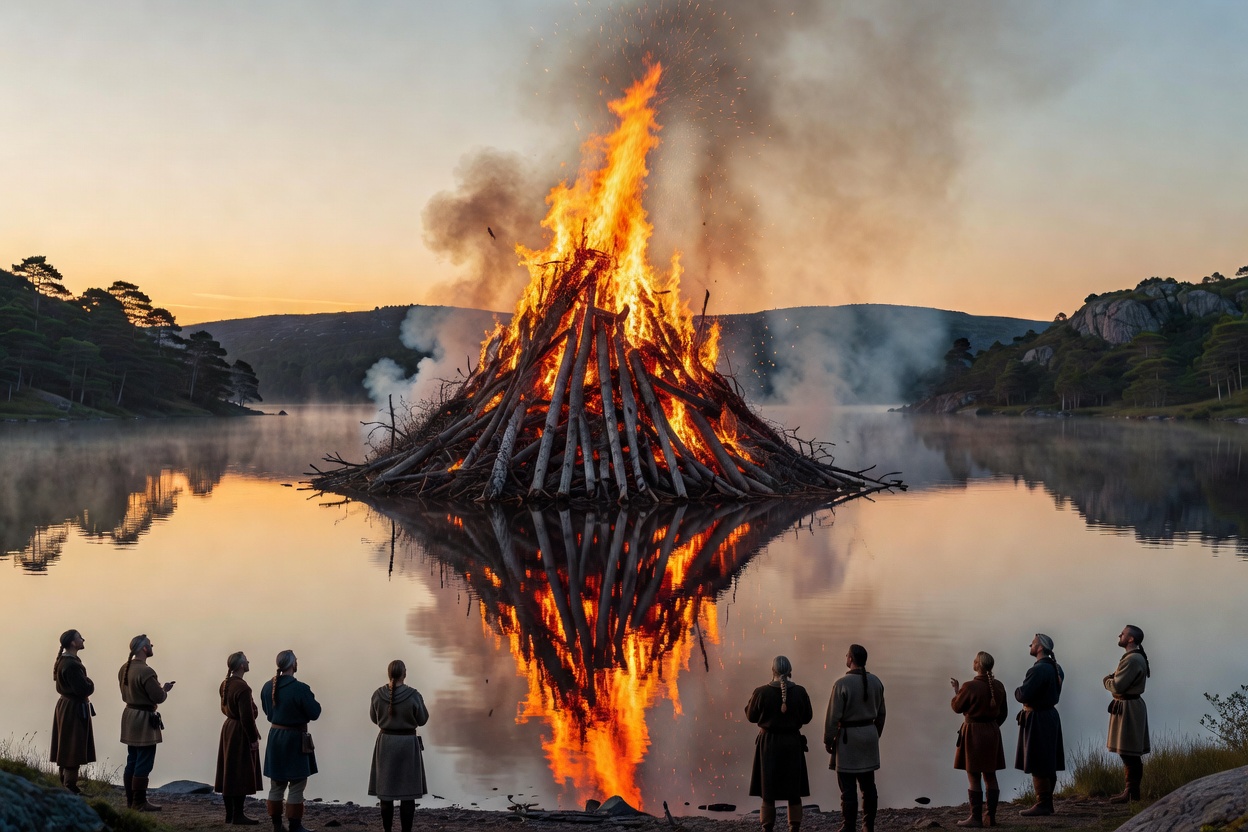
There is nothing quite like Nordic Midsummer (Midsommar / Juhannus) in Sweden, Finland, or the Baltic states. Cities empty completely as residents migrate to lakeside cabins, weave birch and wildflower crowns, raise maypoles, and sing folk songs under a sun that merely grazes the horizon before rising again.
Meanwhile, across the Mediterranean coast of Spain, the Noche de San Juan sees entire towns set up bonfires directly on sandy beaches. At midnight, thousands plunge into the sea to cleanse bad luck, followed by barbecued sardines and fireworks until dawn.
3. Autumn Harvest: Golden Light and Cellar Doors (Sept — Nov)
Autumn is arguably Europe’s most civilized travel window. The summer crowds have vanished, daytime temperatures hover around a crisp 16°C to 20°C, and hillsides turn amber and crimson.
This is the season of grape harvests, mushroom forays, olive pressings, and cattle descents (the alpine Almabtrieb, where cows adorned with elaborate flower headdresses and clanging brass bells return from high summer pastures). Train journeys through regions like Alsace, Wachau, or the Douro Valley during October are visually unmatched.
4. Midwinter Solstice & Traditional Christmas Markets (Dec — Jan)
European winter celebrations are a masterclass in cozyness (or Gemütlichkeit). Historic market squares across Germany, Austria, France, and Central Europe glow with wooden timber stalls, hand-carved nativity scenes, gingerbread (Lebkuchen), and mugs of hot spiced wine (Glühwein).
Further north in Scotland, Hogmanay rings in the New Year with mass torchlight processions down Edinburgh’s Royal Mile, followed by roaring ceilidh dances that spill into chilly dawn streets.
Packing and Logistics by Season
Under-packing for European seasonal weather is the fastest way to ruin a holiday:
| Season | Key Clothing Essentials | Lodging Strategy | Crowd & Transit Realities |
|---|---|---|---|
| Spring | Waterproof trench/shell, wool socks, comfortable walking flats | Shoulder-season deals; good availability | Moderate crowds; train schedules run predictably |
| Summer | Linen shirts, UV sunhat, mosquito balm, water bottle | Book 4–6 months ahead; prices double near coasts | High passenger volume; reserve rail seats mandatory |
| Autumn | Warm knit sweaters, light puffer jacket, slip-on ankle boots | Excellent value outside wine harvest hotspots | Relaxed pacing; perfect for spontaneous car or rail trips |
| Winter | Thermal base layers, thermal windproof coat, grippy soles | Surges in alpine resorts & heritage market towns | Winter weather delays possible; pack buffer days |